Modular homes prices in Ireland are easier to understand when you split the project into two numbers: the published unit price and the finished site price. The first number is what you see on supplier pages. The second number is what matters before you pay a deposit.
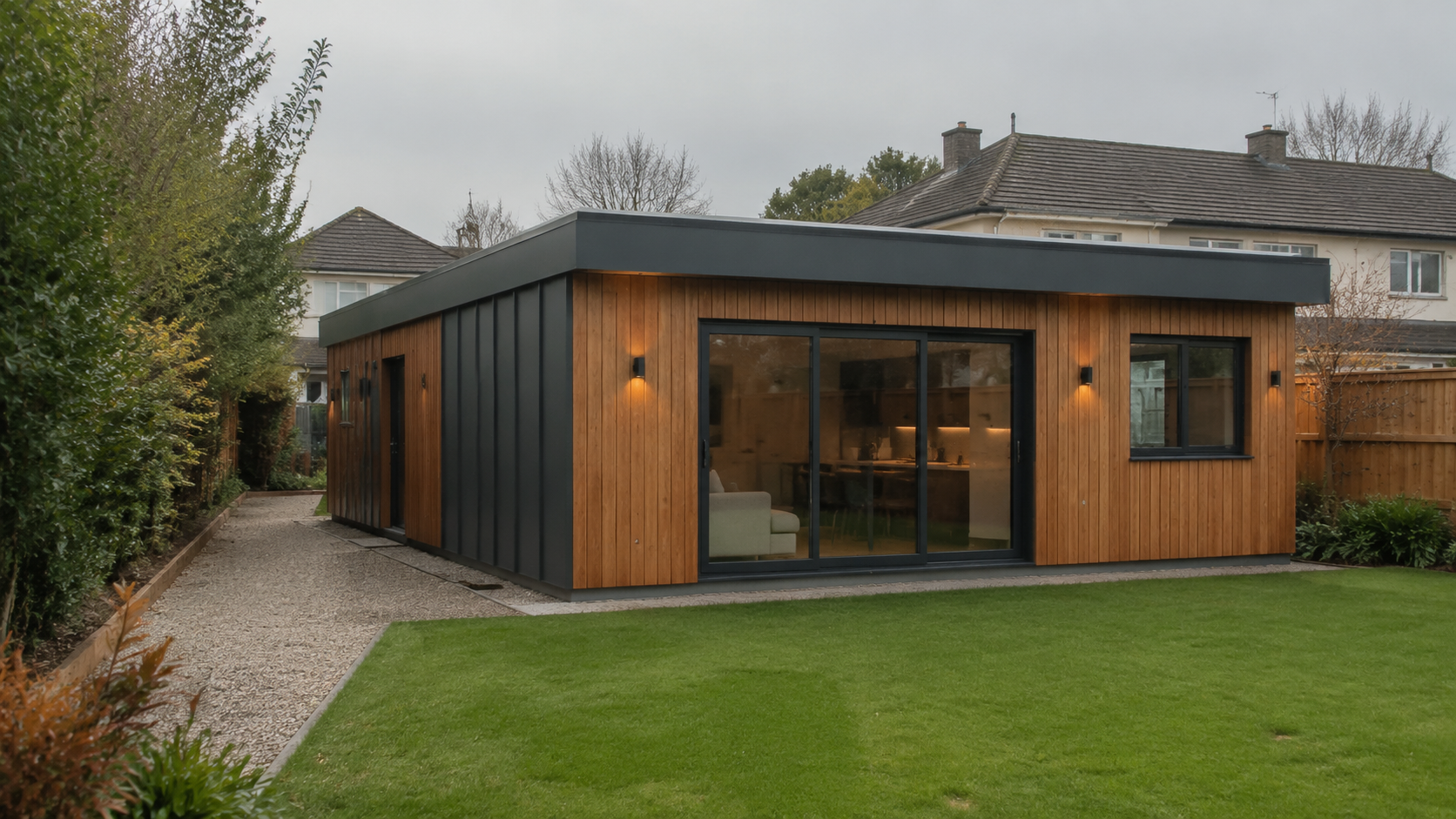 Generated concept image for scale and setting. It is not a supplier product photograph.
Based on public supplier pricing in June 2026, small modular units can start from around €25k-€55k before site-specific works for compact 20sqm-45sqm layouts. Larger turnkey modular homes can move into a very different band, especially where the build is mortgageable, steel-frame, NSAI-certified, or full residential specification.
That wide range is why this guide keeps the budget honest. A cheap-looking modular home can become expensive if access is poor, the foundation is complex, services need major work, or planning requires professional drawings and reports.
Quick answer: what should you budget?
For early comparison, use this as a rough Irish budgeting frame:
| Project type | Public price signals | What may still be extra |
|---|---|---|
| Compact garden room or studio, about 20sqm | From around €25k on some supplier pages | Base, access, electrical connection, planning checks, bathroom/kitchen upgrades |
| 28sqm-35sqm compact modular unit | From around €35k-€45k on some supplier pages | Foundations, wastewater, water connection, transport, cranage, compliance |
| 45sqm auxiliary-style unit | From around €55k on some supplier pages | Full site works, building control, fire/safety rules, professional fees |
| Larger 1-bed modular home | Often €46k-€74k in public example ranges | Exchange rate, site works, spec upgrades, local planning costs |
| Full residential modular home | Public claims can range from about €1,600-€4,000 per sqm depending on system and finance route | Groundworks, utility upgrades, design, planning, VAT/tax treatment, lender requirements |
The safer move is to ask for two quote columns: unit supply and site completion. If a supplier cannot separate those, you may struggle to compare like-for-like. If you need lender funding rather than a cash purchase, read modular home mortgage Ireland before using a low unit price as your main filter. If your decision is driven by the wider market, compare the house price forecast Ireland and modular homes scenario guide before assuming waiting will save money.
What suppliers publicly publish
MyModular publishes compact modular home examples at 20sqm, 28sqm, 35sqm and 45sqm, with prices from €25k, €35k, €45k and €55k before site-specific works. Their own wording says final price depends on finish level, site access, ground conditions and planning route.
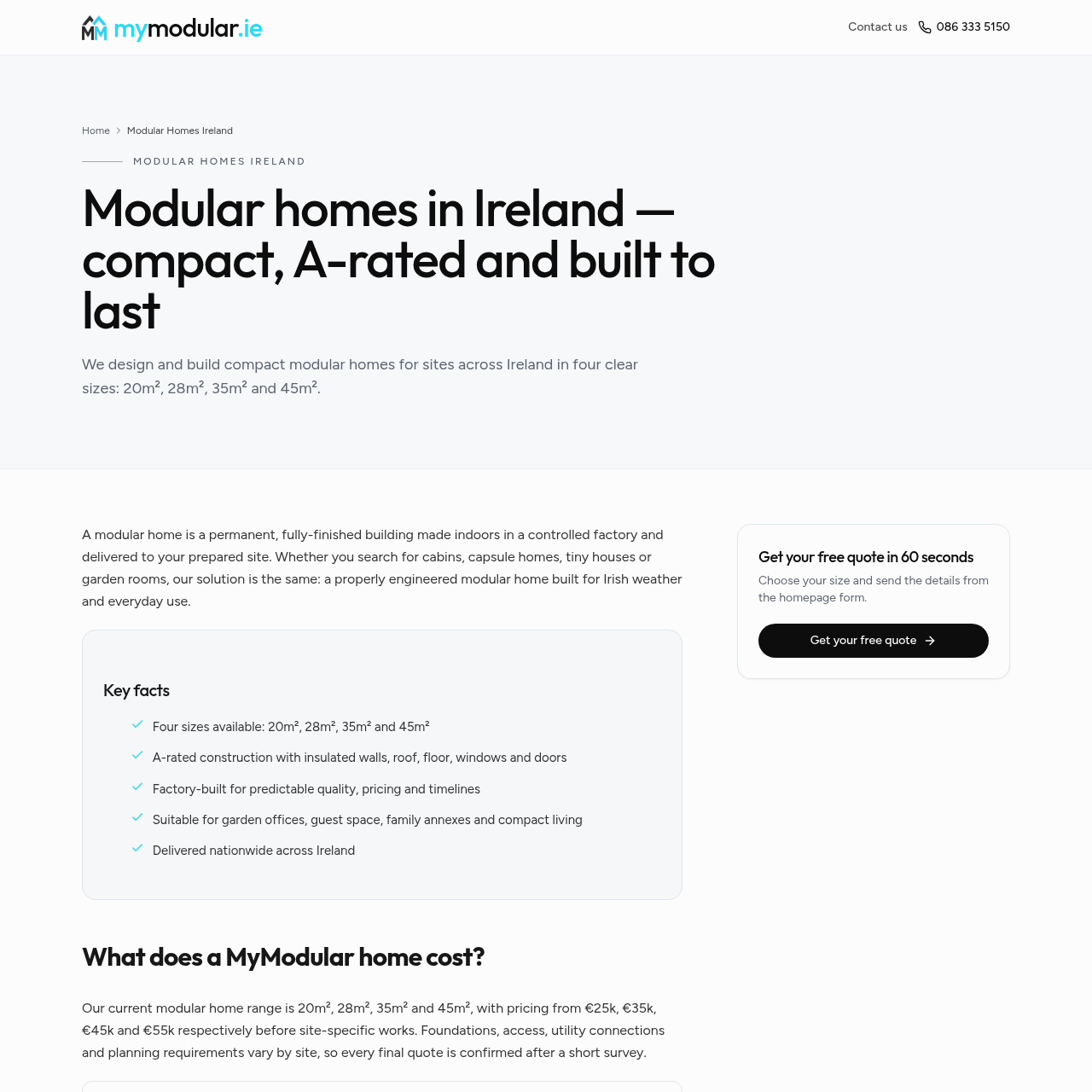 Jina screenshot captured from a public supplier page. Use it as context, not as a recommendation.
Rayco publicly separates finance paths. Its homepage says alternative-finance modular homes can be around €1,600-€1,800 per sqm finished, while mortgageable homes using certified systems can be around €3,000-€4,000 per sqm. Rayco also says pricing is indicative and confirmed after consultation.
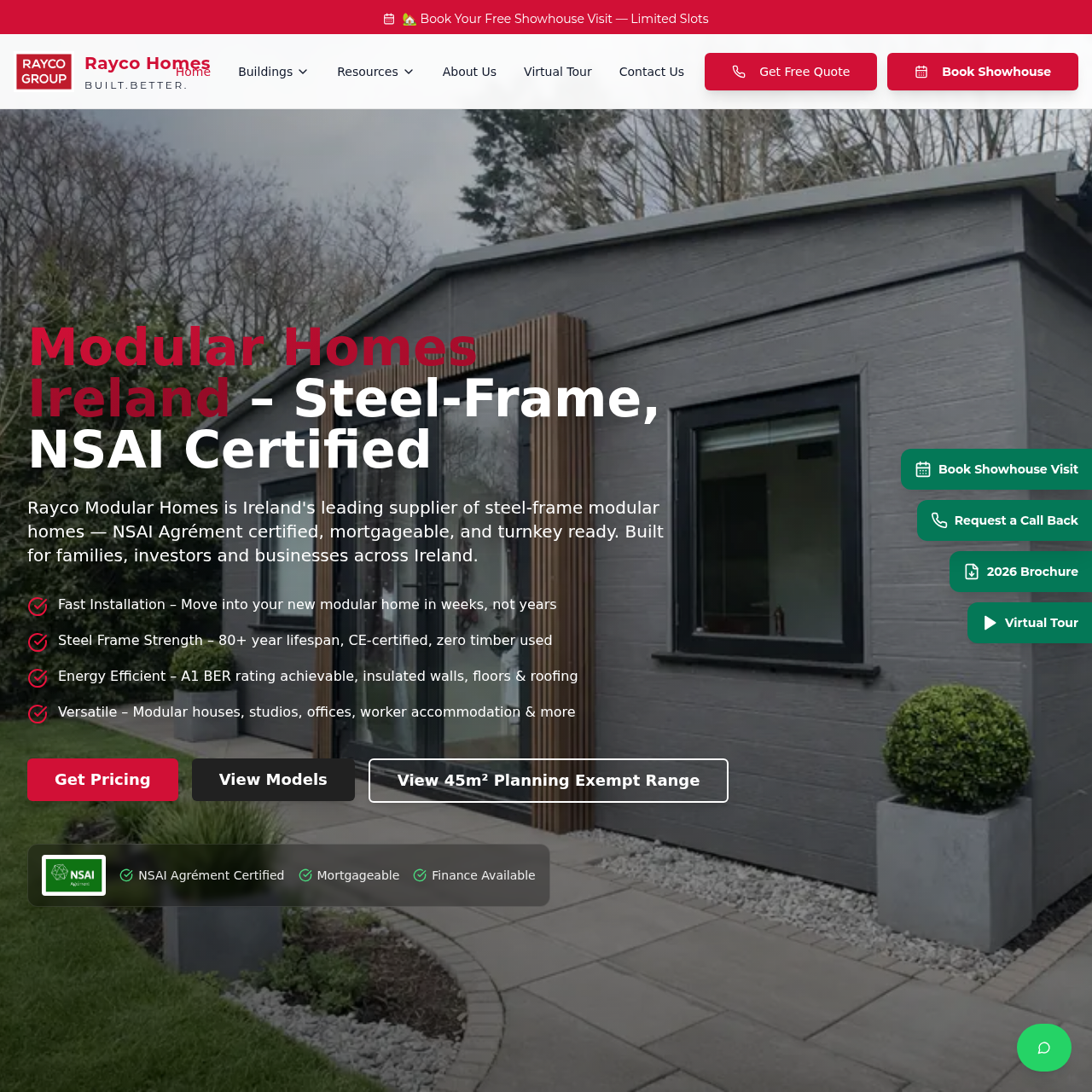 Jina screenshot of a public supplier page showing the different finance-positioned product paths.
Berko publishes a price-list style article with sterling examples. Its listed 1-bed units range from £39,000 to £63,000, with approximate euro guidance of €46k-€74k. It also lists larger 3-bed and 4-bed options that run much higher. The key caveat is important: Berko says groundworks, services, planning fees, access and delivery are site-specific.
None of this makes one supplier the winner. It shows why the market is hard for a homeowner to read. Some pages are talking about a compact garden unit. Some are talking about a full permanent home. Some are supply-only. Some are turnkey. Some include more compliance work than others.
The costs people forget
The unit is only one part of a modular project. In Ireland, the real difference often sits in the garden.
Access is the first check. Can a truck reach the property? Is there a tight side passage? Will a crane be needed? Are overhead wires, walls, trees or neighbour boundaries in the way?
Groundworks can change the project quickly. A simple pad is different from sloped ground, poor drainage, retaining walls or complicated soil conditions.
Services matter because a habitable unit may need electricity, water, wastewater, heating, ventilation, broadband and possibly upgraded capacity from the main house. A garden office is one thing. A self-contained dwelling is another.
Compliance is not optional. The gov.ie planning announcement says building, building control and fire regulations will still apply where relevant, including for habitable dwellings. Even if a planning exemption becomes available, that does not mean a free-for-all.
Professional fees may include design, planning advice, engineer input, BER or energy advice, legal/tax advice and site surveys.
For a serious quote request, ask each supplier:
- Is this price supply-only, installed, or turnkey?
- Does it include foundations or a base?
- Does it include utility connections to the main house or mains?
- Does it include kitchen, bathroom, heating and ventilation?
- Does it include planning drawings or local authority support?
- Does it assume crane access?
- Does it include VAT and delivery?
- What is excluded in writing?
Planning can affect price
The April 21, 2026 gov.ie announcement says proposed changes include a new exemption for an auxiliary habitable dwelling linked to the services of the principal house, between 32sqm and 45sqm in floor area. It also says the exact timing depends on environmental assessment and Oireachtas ratification, with full conditions to be published as part of that process.
So treat the 45sqm conversation as promising but not a guarantee. A supplier may market a 45sqm range, but your site still needs the final rule conditions, building regulations and local authority interpretation checked.
If the unit is for family accommodation, see our 45sqm planning exemption guide. If the unit is for income, read the rental income and payback guide before assuming the numbers work.
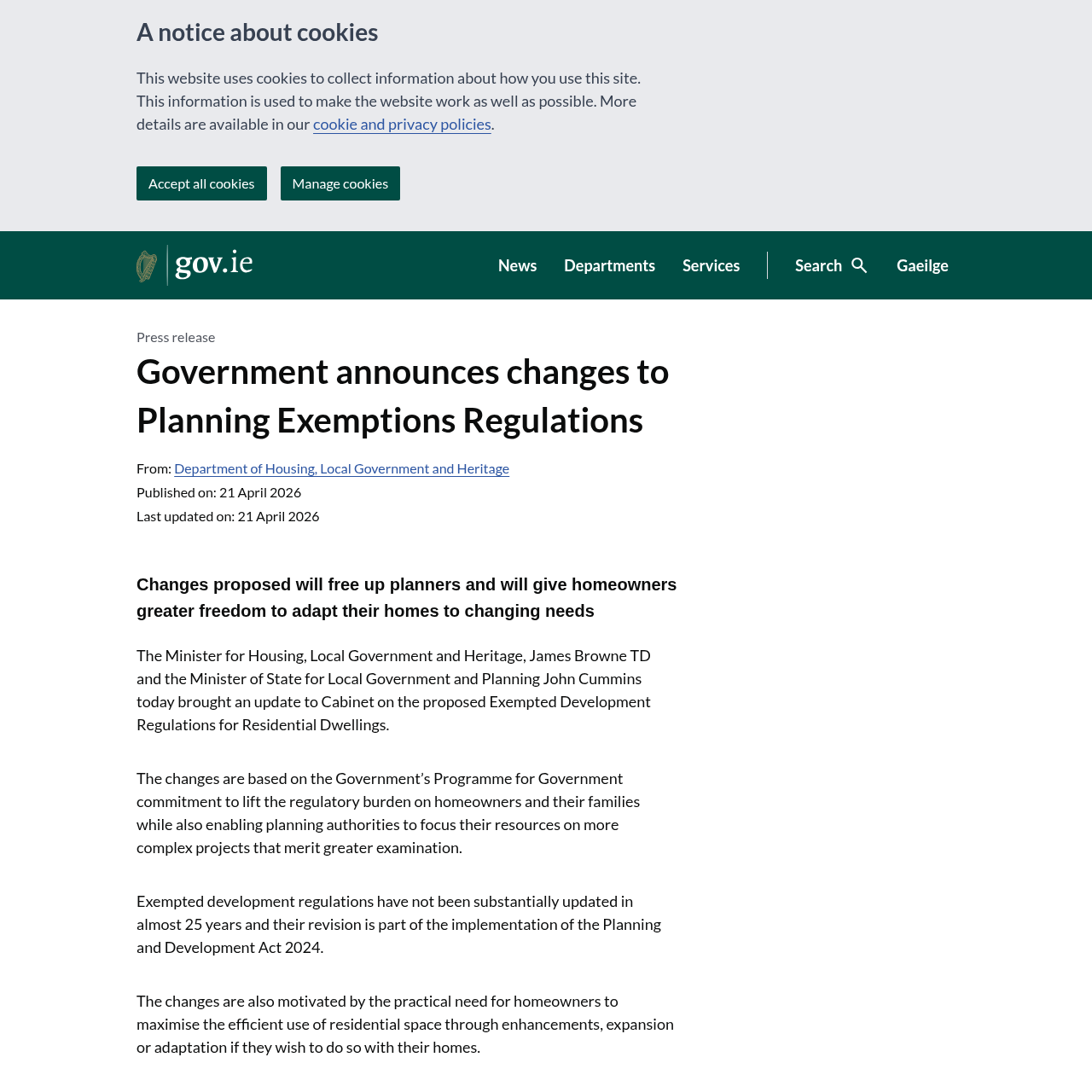 Official gov.ie page captured with Jina. The announcement is useful, but the detailed conditions still matter.
Finance can change the spec
A cash-funded garden unit and a mortgageable home are not the same buying decision. Some suppliers publicly describe mortgageable systems, NSAI certification or A-rated homes. Those claims need to be checked against the actual model, site and lender.
The SEAI Home Energy Upgrade Loan Scheme is also not a general modular-home loan. SEAI says the purpose must be eligible energy upgrade works, with rules around grants, One Stop Shops or Community Coordinators, and minimum BER uplift. It may become relevant for certain upgrade elements, but you should not treat it as automatic modular-home finance.
For quote comparison, tell suppliers and brokers your funding route early:
- Cash or savings.
- Credit union or personal loan.
- Mortgage or mortgage top-up.
- Energy-upgrade finance for eligible works only.
- Family contribution.
The funding route affects the paperwork, warranty, certification, building control, insurance and timeline.
A realistic price-comparison method
Build a simple spreadsheet with one supplier per column. Use the same rows for every quote:
| Quote row | Why it matters |
|---|---|
| Unit size and internal area | A 35sqm home and a 45sqm home are not comparable |
| Bedrooms, bathroom, kitchen | Living specification changes cost |
| Building system | Timber, steel, concrete and SIP-style systems price differently |
| Insulation and BER target | Comfort and finance may depend on this |
| Base and foundations | Often a major excluded item |
| Delivery and cranage | Site access can make or break budget |
| Utility connections | Water and wastewater can be expensive |
| Planning and compliance support | Especially important for habitable use |
| Warranty and certification | Useful for finance, insurance and resale confidence |
| Total exclusions | The most important row in the table |
Do not compare headline prices until the exclusions are written down.
When a cheaper modular home is not cheaper
A lower starting price can still be the right choice if the use case is simple: a garden office, studio, occasional guest space or non-habitable outbuilding. It becomes risky when the use case is permanent living, long-term letting or family accommodation with bathroom and kitchen.
In those cases, the cheapest option may push more work onto you: foundations, drawings, local authority questions, utility coordination, fire compliance and snagging. If you are comfortable project-managing, that may be fine. If not, a higher turnkey quote can be cleaner.
The best question is not "what is the cheapest modular home in Ireland?" It is "what is the cheapest compliant route for this site and use?"
FAQ
How much does a modular home cost in Ireland?
Compact supplier examples can start from around €25k-€55k before site works. Larger residential modular homes can run much higher, especially where the project is turnkey, mortgageable or full residential specification.
Are modular homes cheaper than traditional builds?
Sometimes, but not automatically. Factory construction can reduce time and improve predictability, but site works, planning, services and compliance can close the gap.
Is a 45sqm modular home planning exempt in Ireland?
The Government announced proposed auxiliary dwelling exemptions in April 2026, but the full conditions and timing still need to be confirmed through the formal process. Treat it as an emerging route, not a guaranteed exemption.
Can I rent out a modular home in my garden?
Possibly, but you need planning, building control, tenancy, tax and insurance advice. Do not assume Rent-a-Room relief applies to a detached unit.
Should I request quotes now?
Yes, if you treat the quote as an evidence-gathering step. Ask suppliers to separate unit price, site works, planning support and exclusions so you can compare the project properly.
To get a practical first-pass comparison, use the quote form below and include your county, garden access, intended use, target size and budget range.